If you run a lawn care business by yourself, your equipment is your livelihood. The mowers, trimmers, blowers, edgers, and the trailer that hauls them are what let you earn. When one of them is lost, stolen, broken, or undocumented at tax time, it is not an inconvenience. It is lost income and a lost working day.
Most solo operators keep all of this in their head, in a shoebox of receipts, or in a spreadsheet they update twice and then abandon. That works right up until the moment it matters: a theft off the trailer, a warranty dispute, an insurance claim, or an accountant asking what you paid for the new stander and when.
This is a practical system for tracking the equipment a one-person lawn care business runs on, set up so you will actually keep it current. It is deliberately not crew or fleet software: there is no employee check-in/out and no accountability dashboard, because for a one-person operation those are answering a question you already know the answer to. It is a single-user record built for the way you actually work.
This guide is part of our series on protecting the equipment your lawn care business runs on.
Built for one, not a crew.
Most equipment software is built for crews — employee check-in/out, accountability dashboards, per-seat plans. For a one-person operation that machinery is overkill, not an upgrade. ToolMark is the deliberate fit for a solo operator: a single-user record you keep on your own phone. Do you actually need equipment software as a solo landscaper?
Start with the machines that would hurt to lose
You do not need to catalog every hand tool on day one. Start with the equipment that is expensive, easy to steal, or hard to replace quickly:
- Riding mowers, stand-on mowers, and commercial walk-behinds
- String trimmers, edgers, and brush cutters
- Backpack and handheld blowers
- Hedge trimmers, pole saws, and chainsaws
- Aerators, dethatchers, and spreaders
- The trailer itself, plus ramps and racks
- Batteries, chargers, and spare powerheads
These are the items an insurer, a police report, or a warranty claim will ask about by name. Get them recorded first, then add the smaller gear over time.
Record the details that prove what you own
For each machine, capture the information that lets you identify, value, service, or replace it later. At minimum:
- Make and model
- Serial number
- Purchase date
- Purchase price (your cost basis)
- Current replacement value
- Dealer or seller
- Warranty length and expiration
- Current condition and hours, if the machine tracks them
The serial number and purchase details are the ones people skip and later wish they had. They are what turn a vague "my mower was stolen" into a claim an insurer can actually process, and they are the cost basis your accountant needs at tax time.
Photograph each machine and its serial plate
Take two photos of every important machine: one of the whole unit, and one close-up of the serial number plate. For a trailer setup, take a wide shot of everything loaded as well.
Photos do three jobs at once. They prove the equipment existed and what condition it was in, they capture serial numbers you would otherwise have to crawl under a deck to read, and they give an insurer or the police something concrete to work from. Quick phone photos are enough; they do not need to be staged.
This is the same habit that pays off when you buy any new piece of equipment — five minutes at purchase saves hours later.
Track value for insurance and theft
Lawn care equipment is stolen constantly, often straight off an open trailer at a gas station or a job site. The operators who recover fastest are the ones who already have the records ready.
Keep a current replacement value on each machine, not just what you paid. Values drift, and a claim is settled against what it costs to replace the equipment today. Knowing your total equipment value at a glance also tells you whether your insurance coverage is actually enough.
For the full picture of what to have on file before something goes missing, see what tool information you should save for insurance claims. Detailed theft-prevention records for trailers are covered in a forthcoming guide in this series.
Keep maintenance on a schedule
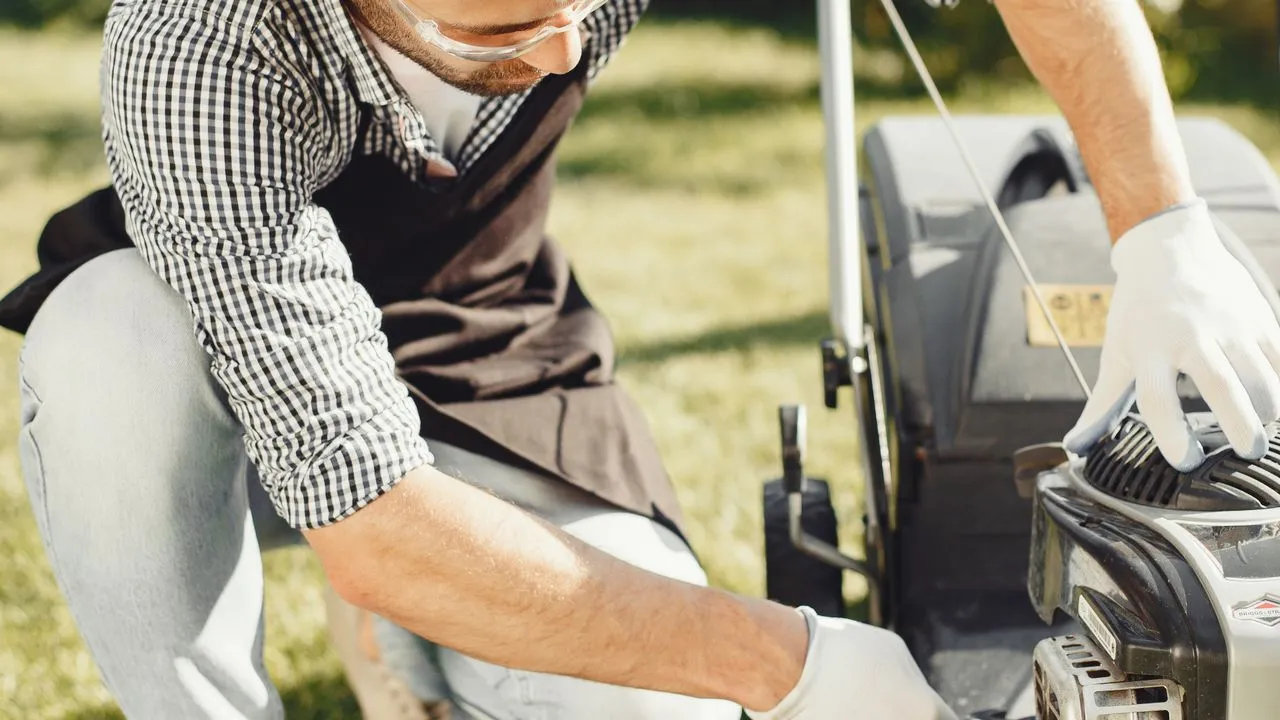
Downtime in season is lost revenue. A mower that will not start on a Monday morning can cost you a full route. Tracking maintenance turns "I think I changed that oil sometime in spring" into a record you can trust.
For each machine, log:
- Oil and filter changes
- Blade sharpening and replacement
- Air filter and spark plug service
- Belt and spindle inspections
- Battery condition for electric and start systems
- Winterization and spring start-up
A running service log also raises resale value when you upgrade, because a documented machine is worth more than an undocumented one. A general seasonal maintenance checklist is a good starting template, and a lawn-care-specific maintenance schedule guide is on the way in this series.
Keep receipts and warranties with the machine
A record is far more useful when the paperwork lives with it. Attach the receipt, the manual, and the warranty document to each machine's entry so they are one tap away when you need a part number, a warranty claim, or proof of purchase.
The general habit is the same one covered in keeping track of receipts, manuals, and warranties — it just matters more when the tool is paying your bills.
Be ready for tax time, not scrambling
At tax time, your equipment is not just gear. It is deductible business property. Your accountant generally needs the purchase date and purchase price for each machine to handle depreciation and deductions correctly.
If those details are already recorded the day you bought each machine, the end-of-year handoff is a quick export instead of an evening spent reconstructing the year from bank statements. A dedicated guide on equipment depreciation and tax records is coming in this series. This is a general record, not tax advice — confirm the specifics with a tax professional.
Don't lend out gear without tracking it
Solo operators help each other out, and equipment gets borrowed. A blower lent to a buddy for a weekend is easy to forget. If you lend equipment, note who has it, when they took it, what came with it, and when it is due back. The same approach that keeps loaned tools from disappearing applies to a borrowed trimmer or trailer.
A simpler way to keep all of this in one place
You can build this system with a spreadsheet, a notes app, and a folder of photos. The hard part is keeping it current and having it with you when something happens in the field.
ToolMark was built for this kind of record keeping. It holds equipment details, serial numbers, photos, receipts, manuals, warranty information, maintenance schedules, replacement values, and lending records in one place on your iPhone. The record rides along with you — on the truck, at the dealer, at the police station, and at tax time — which is exactly where a one-person operation needs it.
Start with the five machines you could least afford to lose. Add photos and serial numbers. Record what each one cost and what it is worth. From there, the system mostly maintains itself, and you are covered before you need to be.
Frequently Asked Questions
What is the best way for a solo lawn care operator to track equipment?
Keep one record per machine with its make, model, serial number, purchase date, purchase price, current replacement value, and a couple of photos, plus a running maintenance log. The format matters less than keeping it in one place you can reach from the truck. A spreadsheet works, but a phone app that holds the photos and receipts alongside the details is easier to keep current.
Do I need accounting software to track my lawn care equipment?
No. Accounting software tracks money; it usually does not hold serial numbers, equipment photos, warranty documents, or maintenance history. For tracking the equipment itself you want a dedicated inventory record. You can hand the purchase dates and prices from that record to your accountant or tax software at the end of the year.
What equipment records do I need for taxes?
For each piece of equipment your accountant generally needs the purchase date and purchase price (your cost basis), plus a clear description. Keeping the receipt and the in-service date with each item means you are not reconstructing it from memory or bank statements in April. This is a general record, not tax advice; confirm specifics with a tax professional.
How does equipment tracking help if gear is stolen off my trailer?
A police report and an insurance claim both move faster when you can immediately provide the make, model, serial number, purchase date, value, and photos of the stolen equipment. Serial numbers also give you a chance of recovery if the equipment turns up at a pawn shop or resale listing. Without records, you are often limited to a rough description and a lower payout.
How often should I update my equipment records?
Add each new machine the day you buy it, while the receipt and box are in front of you. After that, update the record whenever you service a machine, change its value, or sell it. A few minutes per event keeps the whole system trustworthy with almost no ongoing effort.