Power tools are built to work, but that does not mean they should be stored carelessly. Garages, sheds, and basements can expose tools to moisture, dust, temperature swings, pests, and clutter. Over time, poor storage can lead to rust, dead batteries, damaged cords, missing accessories, and tools that are harder to use safely.
A good storage setup does not have to be expensive. The goal is to keep tools dry, protected, easy to find, and ready to use.
Keep tools off damp floors
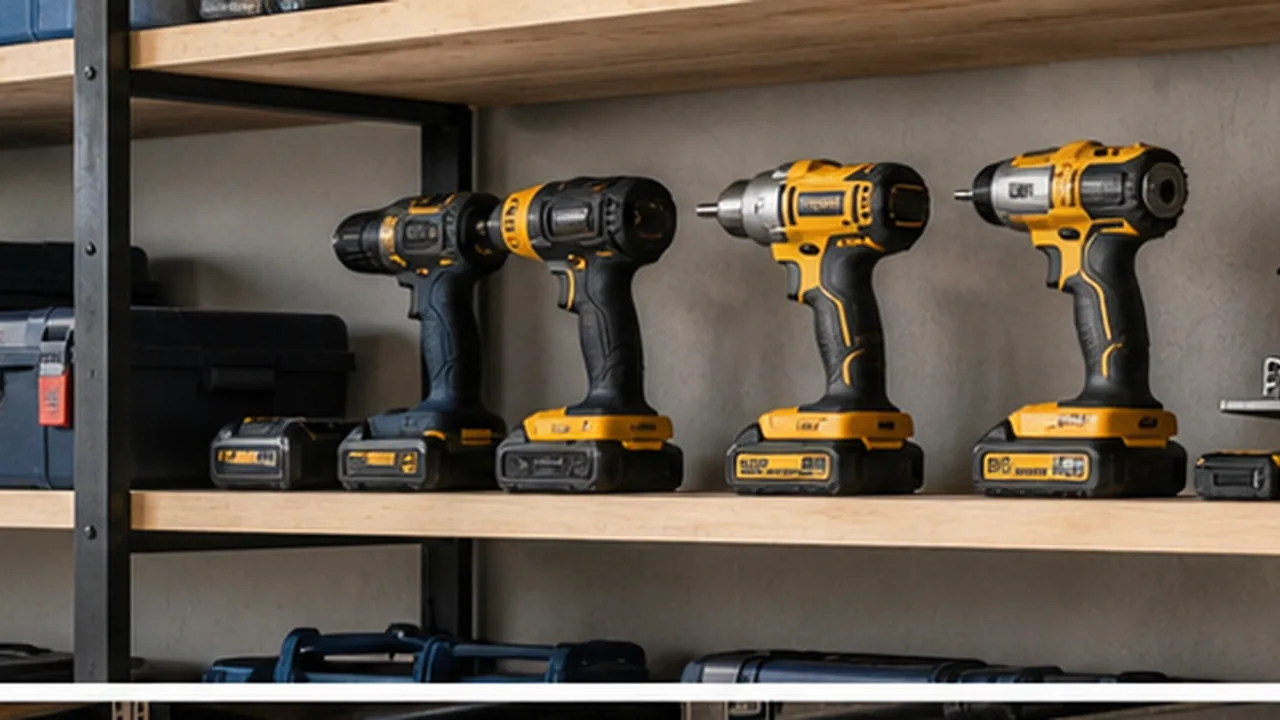
Concrete floors can hold moisture, especially in garages and basements. Sheds may also have damp floors during wet seasons. Storing power tools directly on the floor increases the chance of rust, water damage, and accidental impact.
Use shelves, cabinets, wall hooks, drawers, or toolboxes whenever possible. Even a simple raised shelf is better than leaving tools on the ground.
If a tool must be stored low, keep it in a case or bin that protects it from moisture and dust.
Watch for humidity and condensation
Humidity is one of the biggest storage problems for power tools. Metal parts can rust, electrical contacts can corrode, and paper manuals or receipts can become damaged.
Basements and sheds are especially prone to humidity. If your storage area feels damp, consider using:
- A dehumidifier
- Moisture absorbers
- Sealed storage bins
- Wall-mounted storage
- Better ventilation
You do not need to create a climate-controlled workshop, but you should avoid storing expensive tools in areas that stay damp for long periods.
Store batteries separately when needed
Cordless tool batteries may not like the same storage conditions as the tools themselves. Extreme heat and cold can reduce battery performance over time.
If your garage or shed gets very hot in summer or very cold in winter, consider storing batteries indoors or in a more stable area. Keep chargers dry and away from sawdust, rags, and flammable clutter.
It also helps to group batteries by platform so you can quickly see what is charged, what is missing, and what belongs with each tool brand.
Use cases for tools that need protection
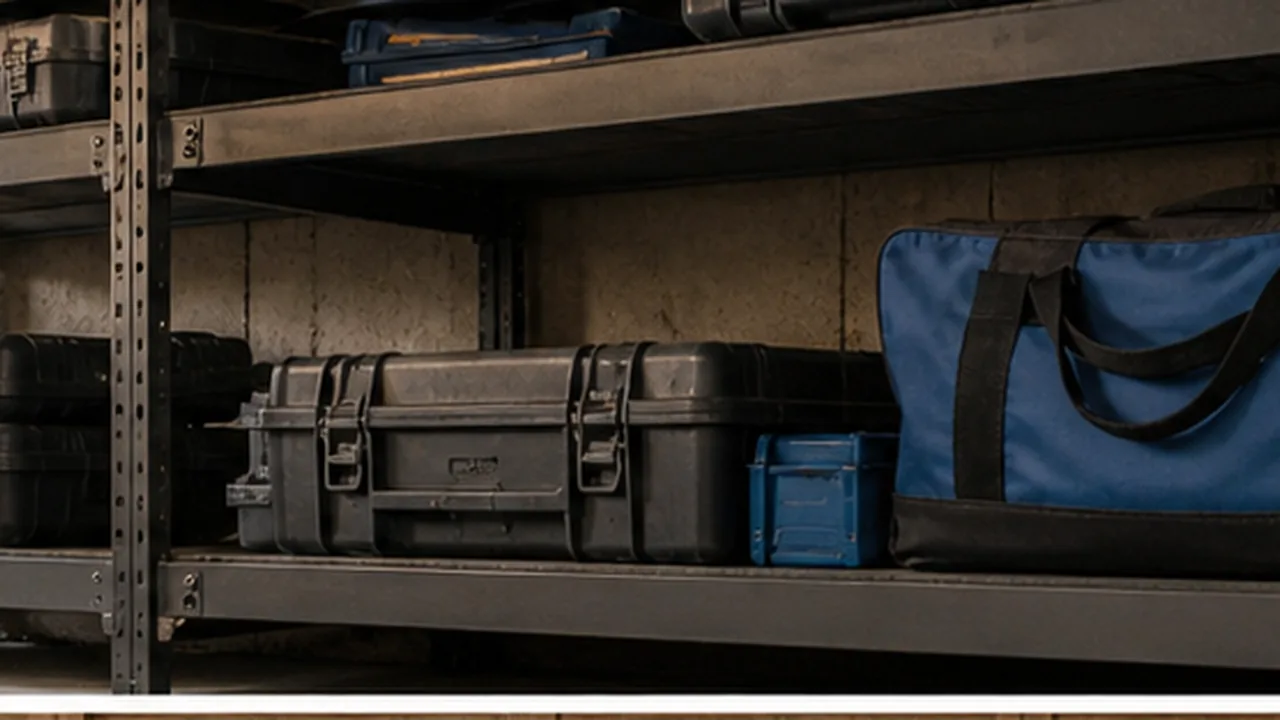
Many power tools come with a case or bag. It may be tempting to throw those cases away to save space, but cases are useful for tools with small parts or delicate accessories.
Cases are especially helpful for:
- Drills with bit sets
- Routers with bases and guides
- Circular saws with extra blades
- Oscillating tools with attachments
- Laser levels
- Specialty tools used only occasionally
For tools used every week, open storage may be more convenient. For tools used a few times a year, the original case can prevent missing parts and damage.
Control dust before it becomes a problem
Garages and workshops collect dust from woodworking, sanding, yard work, cardboard, vehicles, and general storage. Dust can clog vents, switches, chargers, and tool cases.
Try to keep power tools away from heavy dust zones when possible. If you do woodworking, store tools not currently in use in drawers, cabinets, or covered shelves. Blow or brush off tools after messy projects, especially before putting them into cases.
Avoid burying chargers and batteries near sawdust piles or under workbench debris.
Protect cords and plugs
Corded tools are often damaged by poor cord storage. Cords get wrapped too tightly, pinched under bins, run over by carts, or tangled with other tools.
When storing corded tools:
- Coil cords loosely
- Avoid sharp bends near the plug
- Do not hang heavy tools by the cord
- Inspect cords before use
- Keep extension cords separate and untangled
A damaged cord is more than an inconvenience. If a cord is cracked, cut, or frayed, stop using the tool until it is repaired or replaced.
Keep accessories with the right tools
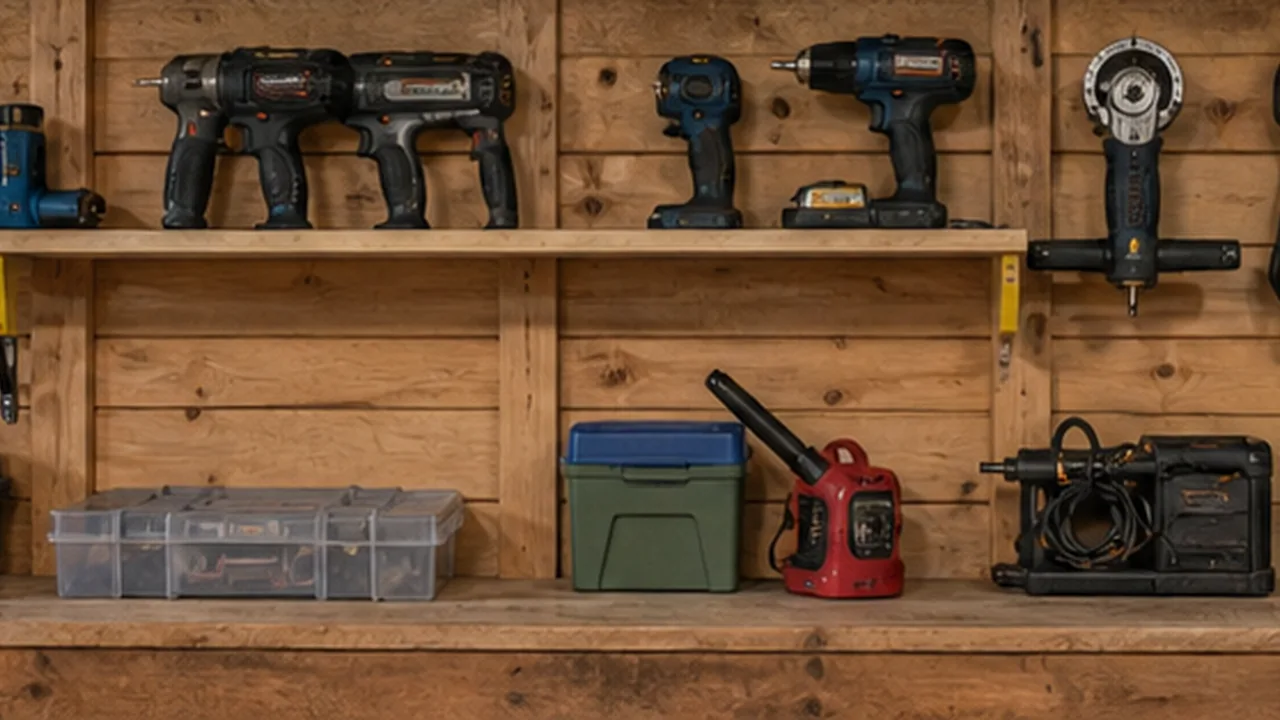
A power tool is easier to use when the right accessories are nearby. Extra blades, bits, sanding pads, guards, fences, wrenches, and batteries often get separated from the tool.
Use small bins, drawer dividers, pouches, or labeled cases to keep accessories together. For tools with unique parts, consider storing those parts in the original case or in a clearly labeled container.
This is especially important for tools that require a specific wrench, guide, charger, or replacement part.
Make seasonal tools easy to rotate
Some tools are seasonal. Lawn equipment, snow tools, pressure washers, leaf blowers, and outdoor power tools may not need prime space all year.
At the start of a new season, move the tools you will use most often into easier reach. Move off-season tools to less convenient storage after cleaning and inspecting them.
This keeps the main work area from getting crowded while still protecting tools you will need later.